

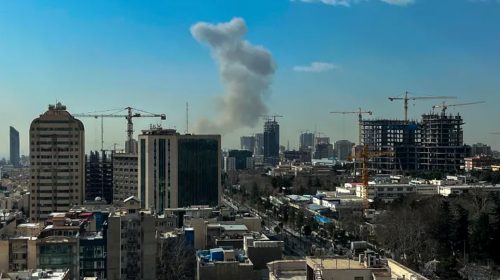
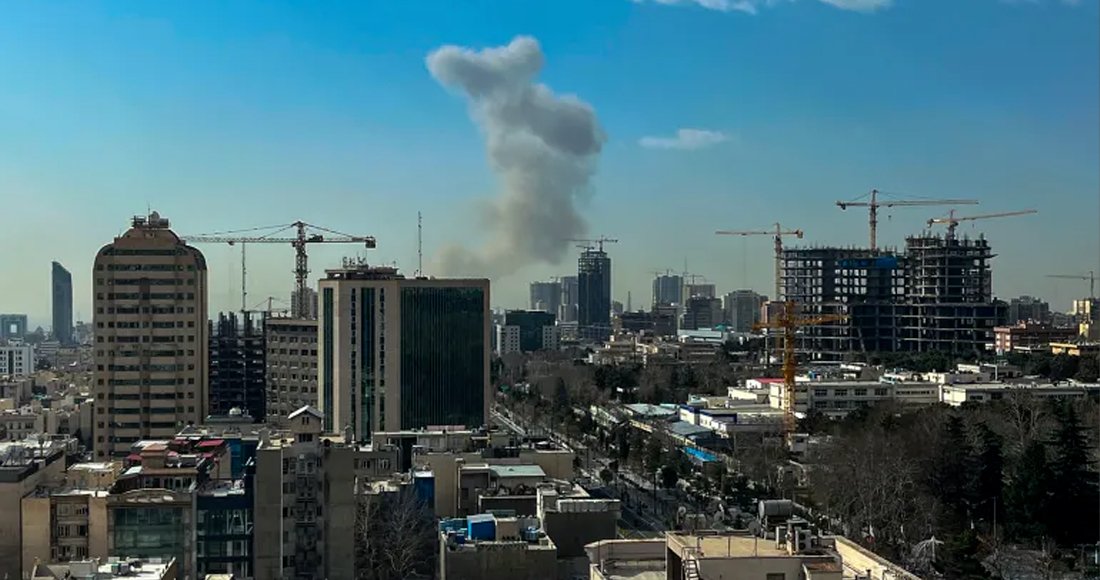
04 March, KATHMANDU: Tensions between the US-Israel and Iran have escalated into a conflict in the Middle East. This raises the risk of multifaceted impacts on Nepal’s economy. The tension, which began with the US and Israel launching attacks on Iran on February 28, shows signs of prolonging. Subsequently, attacks have been carried out on US base camps located in countries like the United Arab Emirates (UAE), Qatar, Saudi Arabia, and Kuwait. The Middle East conflict appears set to continue.
Iran has been attacking US military base camps located in Gulf nations. This has increased concerns regarding the safety of Nepalis residing in those countries.
Experts point out that disruptions in the global supply chain, rising petroleum prices, and challenges to the security of migrant workers could severely impact Nepal’s overall economy, foreign trade, and remittances. They state that the Middle East conflict’s effect on Nepal’s economy could lead to not only economic but also social and psychological crises.
The escalating conflict and tension in the Middle East are set to directly affect Nepal’s economy. Economist Keshav Acharya states that the Middle East tension will further destabilize the already sluggish Nepali economy.
He analyzes that it will specifically create a serious crisis in the sectors of remittances, petroleum supply and pricing, tourism, and foreign employment. Trade expert Ravi Shankar Sainju states that the Middle East conflict will impact Nepal’s overall economy, external sector, remittances, and trade.
Daily NPR 2.5 Billion Remittance at Risk
Nepal’s economy relies heavily on remittances. Approximately NPR 18 trillion in remittances enter Nepal annually. This means about NPR 5 billion flows into Nepal daily. According to economist Acharya, about 50% of this (approximately NPR 2.5 billion) comes only from the Gulf countries. If the Middle East conflict prolongs, the first and biggest impact will be on remittances.
He explains that if remittances stop, the purchasing power of Nepalis will decrease, and the demand for consumer goods in the market will plummet.
According to Nepal Rastra Bank Executive Director Kharel, 41% of the total remittances entering Nepal come from 15 Middle Eastern countries. He further states that about 37% of remittances come specifically from Qatar, Saudi Arabia, UAE, and Kuwait. In the event of escalating conflict, job losses for workers there, the compulsion to return home, and the halt of new workers going abroad could severely disrupt remittance inflows. Kharel analyzes that this will make the daily lives of families dependent on education, health, and consumption difficult.
Similarly, trade expert Sainju highlighted the psychological aspect of this situation. Currently, about 1.7 million Nepalis are employed in the Middle East. While those workers are insecure due to the fear of war, their families remaining in Nepal are under even greater psychological stress.
‘If something happens in the Middle East, the sleep of 1.7 million families here will be disturbed,’ says Sainju. This has increased significant psychological fear and despair in society. It is estimated that about 2 million Nepali workers are employed in the Gulf countries. Nepalis in the UAE, Qatar, Saudi Arabia, and Kuwait are worried. Their anxiety has increased due to the apprehension that the war might escalate further.
Disruption in Trade and Supply Chain: Heavy Increase in Freight Costs
The Middle East conflict, especially the attacks in the Red Sea, will cause a change in the global trade route. According to trade expert Sainju, ships are being forced to bypass the Red Sea route and travel around via the Cape of Good Hope in Africa.
This has increased the shipping distance by about 6,500 kilometers, and the travel time has been extended by 15 to 20 days. This has a direct impact on Nepal’s foreign trade. As shipping time lengthens, ship fares and insurance premiums are set to increase.
There is a risk that the price of raw materials and consumer goods imported by Nepal could increase by about 10%. On the other hand, the increased cost of high-value Nepali products exported to Western countries, such as carpets and garments, will reduce the competitiveness of Nepali products in the global market. Costs have also skyrocketed for air freight due to canceled flights and route changes.
The Middle East tension has already started to push up crude oil prices in the international market. The price of oil, which was $67 per barrel a few days ago, has already reached $73. Economist Acharya explains that drone attacks on oil fields in countries like Saudi Arabia and the UAE, and the risk of Iran closing the Strait of Hormuz, will affect both oil production and supply. This will increase insurance premiums for ships and freight costs, which will directly affect oil prices in Nepal, Acharya states.
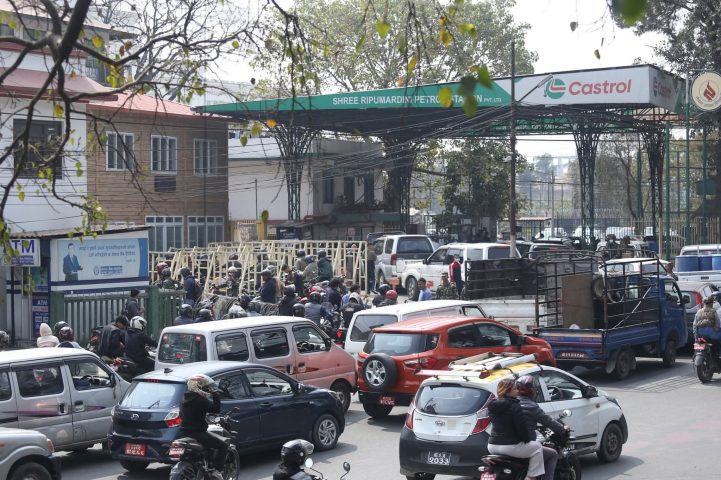
According to him, if the war continues for a long time, India might cut Nepal’s quota, citing insufficient oil for its own needs. If this happens, chaos could erupt at Nepali petrol pumps within 15 days, and black marketing could begin.
Risk in Petroleum Product Storage
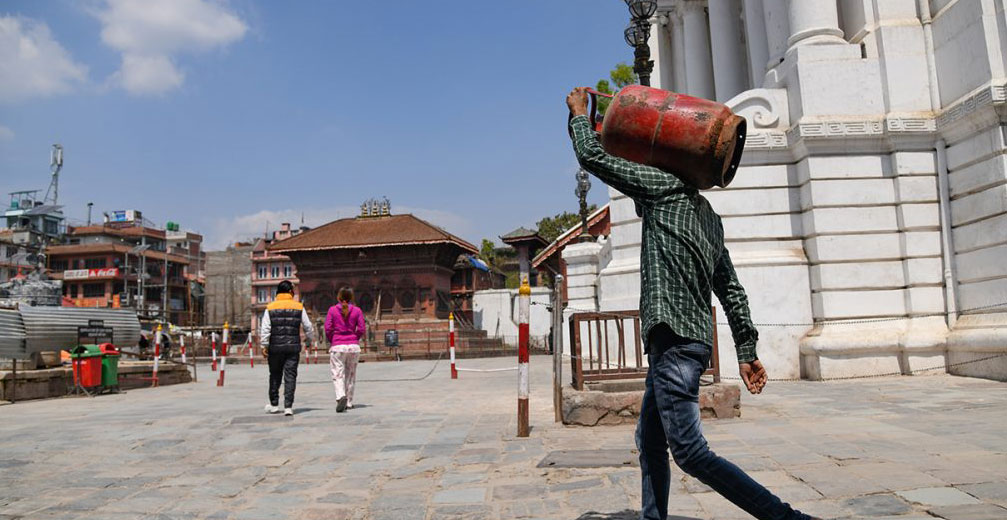
The risk of imported inflation in Nepal is high due to rising crude oil prices caused by the conflict. According to NRB Executive Director Kharel, although Nepal’s direct trade in goods with the Middle East is small (5% imports and 2% exports), the price of petroleum products affects the entire economy. He says that as soon as oil prices rise, transportation and production costs increase, leading to inflation reaching the kitchen.
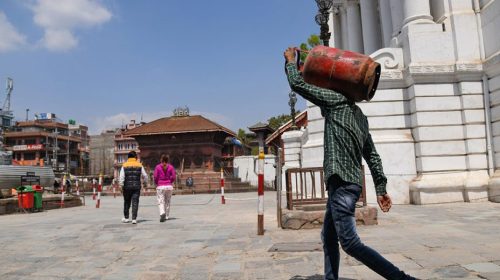
Trade expert Sainju expresses serious concern about Nepal’s fuel storage capacity. While India has fuel storage capacity sufficient for 75 days, Nepal has storage capacity sufficient for only 12 to 15 days. This indicates a risk of fuel chaos in Nepal even with a small disruption in the supply chain.
Flight Cancellations, Decline in Tourism and Revenue
Due to the conflict, many international flights to Kathmandu are now being canceled. Acharya states that this will lead to a large decline in tourist arrivals. He notes that flight reductions will also result in lost revenue for Nepal’s airport from landing/takeoff charges, ground handling fees, and refueling income.
About 1.7 million Nepalis are employed in the Middle East. Their safety will become the biggest challenge if the war escalates. If the situation arises where the state is compelled to rescue and repatriate these citizens, it will add a burden of billions of rupees to the government.
Economist Acharya states that the government will be pressured to prioritize saving citizens’ lives, even if it means cutting capital (development) expenditure, which will completely halt development works. There is a tendency in Nepal for the private sector and traders to arbitrarily increase the prices of all consumer goods as soon as petroleum prices rise.
Impact on Overall Economy and External Sector
Nepal’s overall economy is currently attempting to recover its rhythm after enduring shocks such as COVID-19, the earthquake, and the global economic slowdown. According to Kharel, there is currently sufficient liquidity in the banking system, interest rates have decreased, and foreign exchange reserves are sufficient to import goods and services for more than 12 months.
While macroeconomic indicators are positive, suggesting the economy is not immediately on the verge of collapse, this stability may not be sustainable, states NRB Director Kharel.
‘This crisis is also a lesson for Nepal. It confirms that the country cannot run solely on a perpetually dependent economy and remittances,’ he says.
Kharel states that Nepal must diversify its trade away from being concentrated in only a few countries and connect to the global value chain. The government will face pressure to create domestic employment as an alternative to foreign employment.
‘Investment must be increased in agriculture, tourism, and small industries. Storage capacity for petroleum products and essential goods must be immediately expanded to reach at least three months’ worth,’ says economist Acharya.
He suggests promoting digital payment systems to make the economy transparent and dynamic. Although the Middle East conflict is beyond Nepal’s control, it appears that the government must immediately put forward preparations and strategic plans to combat the resulting economic, trade, and psychological impacts.








+ There are no comments
Add yours